
In March 2026, the way we categorize galaxies has been refined by the James Webb Space Telescope (JWST), which has revealed that the “Hubble Sequence” (the traditional tuning fork diagram) is far more complex than previously thought. While the three main categories remain—Spiral, Elliptical, and Irregular—we now understand how they transform into one another over billions of years.
🌀 1. Spiral Galaxies: The Cosmic Pinwheels
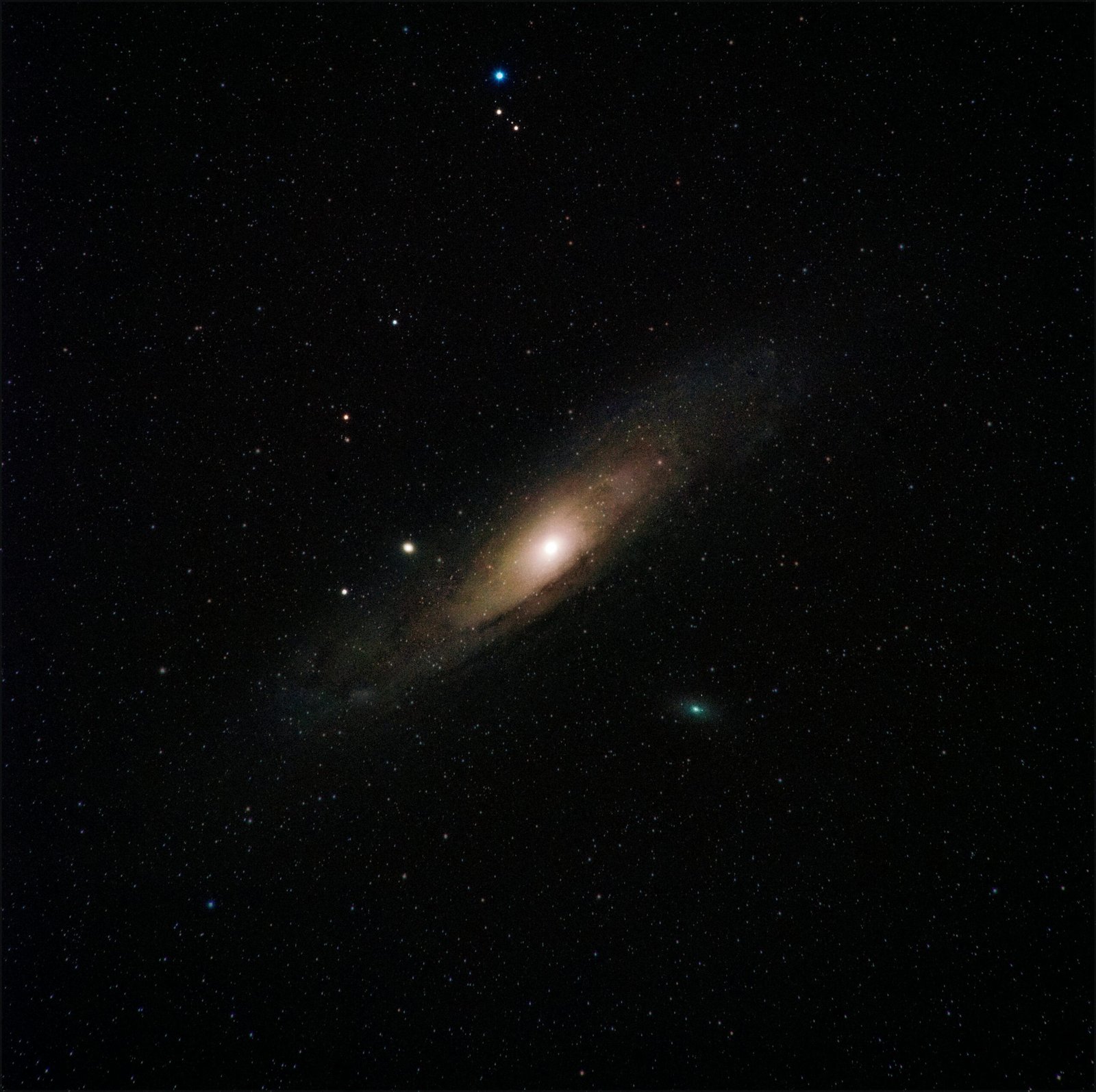
Spiral galaxies are characterized by a central bulge surrounded by a flat, rotating disk of stars, gas, and dust.
- Structure: They feature distinct “arms” that wind outward. These arms are sites of active star formation, rich in young, blue stars and dense molecular clouds.
- The Barred Spiral: Many spirals (including our own Milky Way) have a central “bar” of stars that channels gas into the center, fueling the central black hole or bursts of star formation.
- Dynamics: They are “living” galaxies, constantly recycling gas into new generations of stars.
🥚 2. Elliptical Galaxies: The Cosmic Retirement Homes
Ellipticals range from nearly spherical to elongated football shapes. They are the largest galaxies in the universe.
- Composition: Unlike spirals, ellipticals have very little gas and dust. They are composed mostly of old, red stars. Because they lack the “raw materials,” star formation has almost entirely stopped.
- Origin: Most large ellipticals are thought to be the result of galactic collisions. When two spirals merge, their gas is often stripped away or consumed in a massive burst, leaving behind a “dead” elliptical shell.
- The Giants: The most massive known galaxy, IC 1101, is an elliptical galaxy spanning nearly 6 million light-years.
🎨 3. Irregular Galaxies: The Chaotic Youth
Irregular galaxies have no distinct shape or symmetrical structure.
- Causes of Chaos: Their distorted shapes are usually the result of intense gravitational tugs-of-war with larger neighbor galaxies.
- Star Factories: Because of the gravitational turbulence, gas is often compressed, leading to rapid, chaotic star formation.
- The Magellanic Clouds: The Large and Small Magellanic Clouds, visible from Earth’s Southern Hemisphere, are the most famous examples of irregular galaxies orbiting the Milky Way.
📊 2026 Galaxy Comparison Matrix
| Feature | Spiral | Elliptical | Irregular |
| Shape | Disk with spiral arms | Rounded to elongated | No defined shape |
| Star Formation | High (in the arms) | Very Low to None | High (chaotic) |
| Star Age | Mix of young (blue) and old | Mostly old (red/yellow) | Mostly young (blue) |
| Gas & Dust | Abundant | Very scarce | Abundant |
| 2026 Example | Andromeda (M31) | M87 (Black Hole galaxy) | Large Magellanic Cloud |
🔭 4. The 2026 “Evolutionary” View
In March 2026, astronomers are focusing on “Green Valley” Galaxies. These are galaxies caught in the transition between being a “Blue Cloud” (active spiral) and a “Red Sequence” (dead elliptical).
JWST data has shown that this “quenching”—the process of a galaxy “dying”—happens much faster than models predicted, often driven by the massive Supermassive Black Hole at the center blowing the gas out of the galaxy like a cosmic leaf blower.
Analyst Insight: For your astronomy blog, the trend this month is “Galactic Archaeology.” We are no longer just looking at what galaxies are, but using JWST to look back 13 billion years to see the “seeds” of these shapes forming in the early universe.
- Create a detailed comparison table of Galactic Evolution theories
- Summarize JWST findings on high-redshift galaxy shapes
- Draft an executive summary on the ‘Green Valley’ galaxy transition





Leave a Reply