
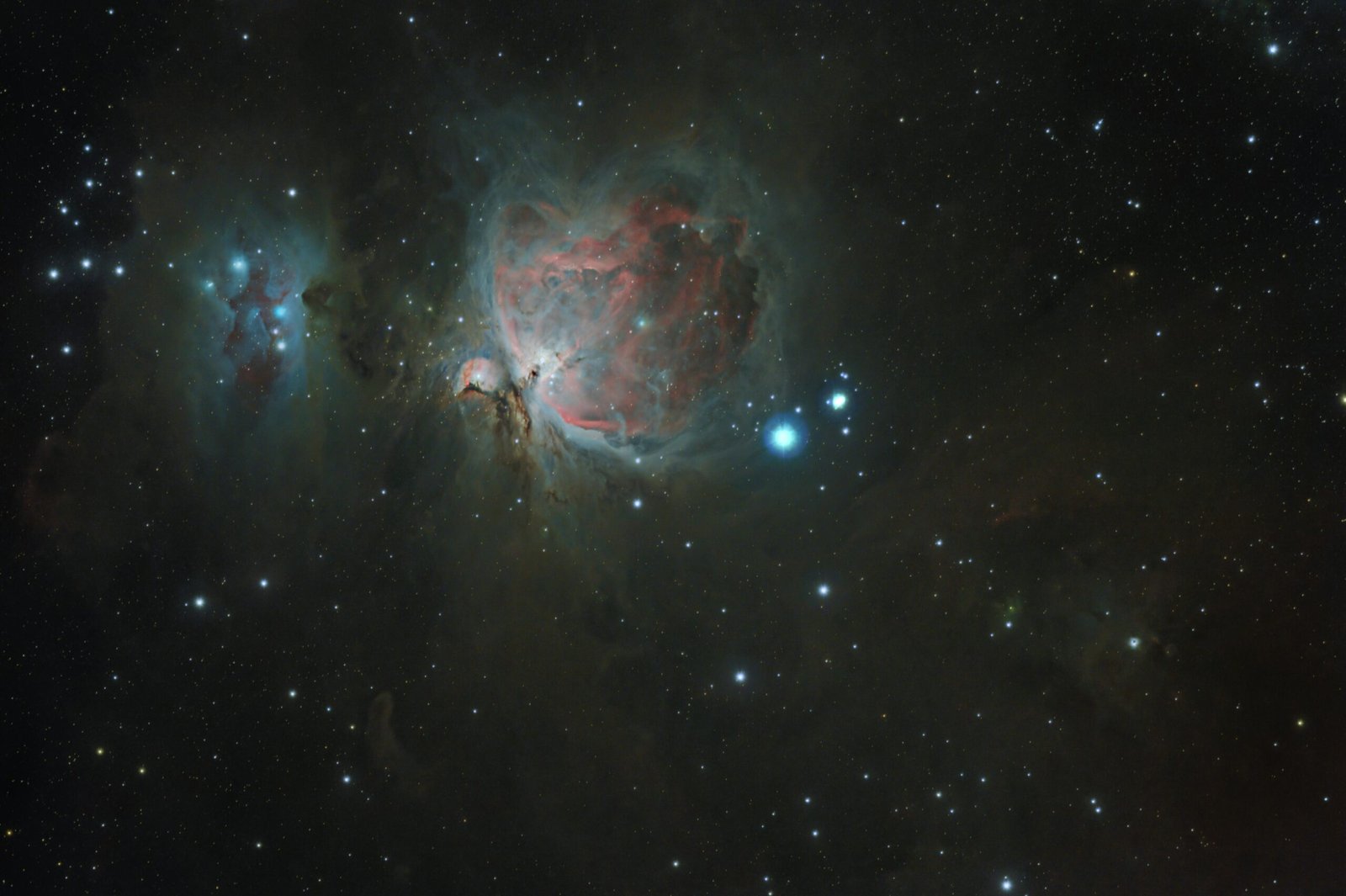
In March 2026, our understanding of Quasars (Quasi-Stellar Radio Sources) has reached a new peak. Long considered the “beacons of the deep universe,” these objects are now being used as the primary tools for mapping the Cosmic Web and understanding how the first generation of black holes grew to such “impossible” sizes so quickly.
A quasar is not a star, but an Active Galactic Nucleus (AGN) powered by a supermassive black hole that is consuming matter at an extraordinary rate.
🕳️ 1. The Anatomy of a Powerhouse
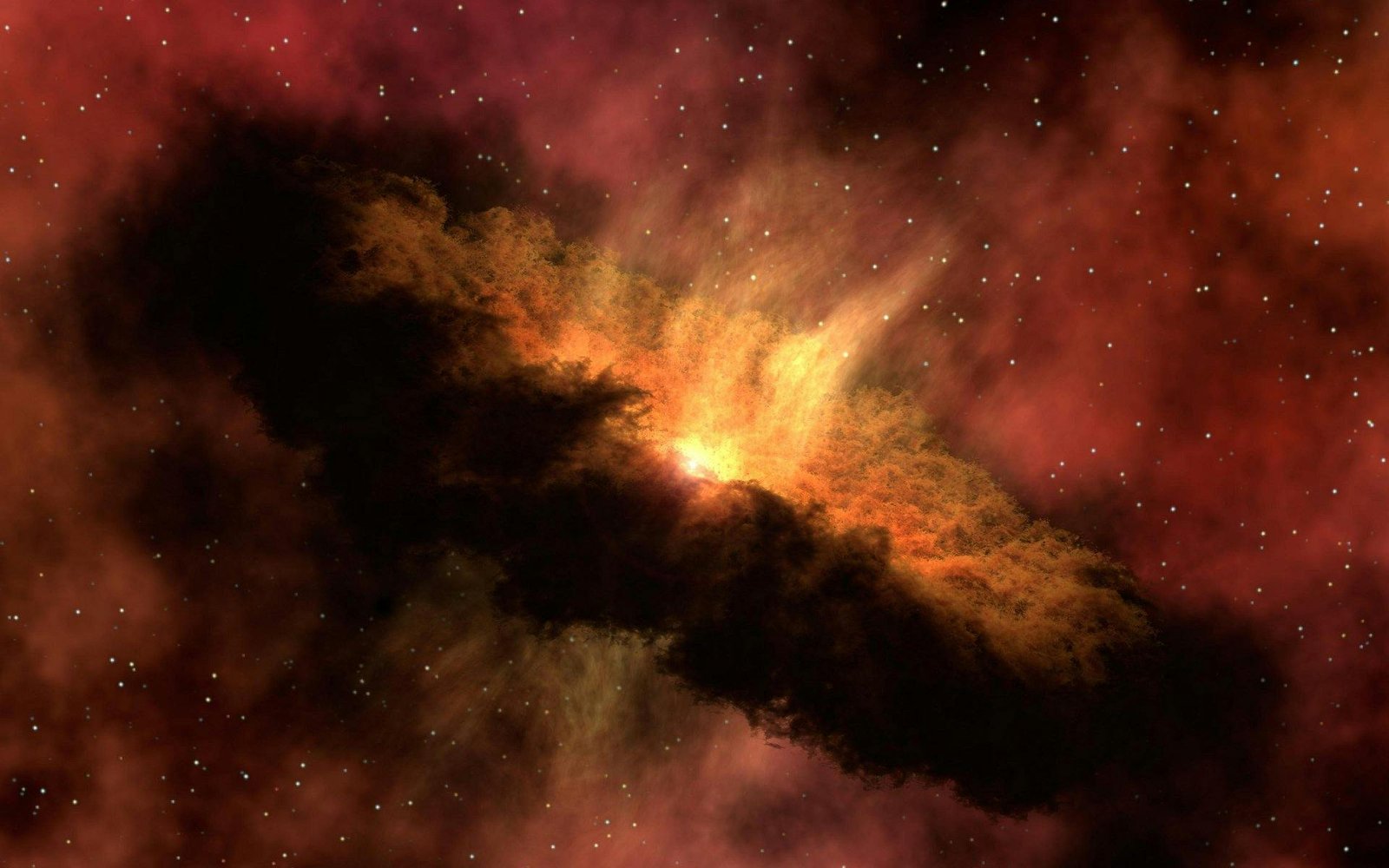
The brilliance of a quasar doesn’t come from the black hole itself (which is dark), but from the chaos surrounding it.
- The Accretion Disk: As gas and dust from the host galaxy spiral toward the black hole, they form a flattened disk. Friction and gravitational energy heat this gas to millions of degrees, causing it to glow brighter than hundreds of galaxies combined.
- The Event Horizon: The “point of no return.” Once matter crosses this boundary, its light is lost to the universe forever.
- Relativistic Jets: In some quasars, intense magnetic fields funnel charged particles away from the poles at nearly the speed of light, creating beams that can stretch for millions of light-years.
🌟 2. Why Are They So Bright?
Quasars are the most luminous objects in the known universe.
- Luminosity: A single quasar can emit 1,000 to 10,000 times the energy of the entire Milky Way galaxy.
- Visibility: Because they are so bright, we can see them from the very edge of the observable universe. Looking at a quasar is literally looking back in time—often more than 12 billion years.
- Energy Conversion: Quasars are incredibly efficient. While nuclear fusion in stars converts about 0.7% of mass into energy, a spinning black hole can convert up to 42% of an object’s mass into pure radiation.
🔭 3. The 2026 “Fastest-Growing” Record
In early 2026, researchers using the Very Large Telescope (VLT) and JWST confirmed the statistics for J0529-4351, currently the most violent quasar known.
- Growth Rate: This black hole consumes the equivalent of one Sun per day.
- Brightness: It is over 500 trillion times brighter than our Sun.
- Significance: Its existence challenges 2026 cosmological models because it reached a mass of 17 billion suns far earlier in the universe’s history than previously thought possible.
📊 Quasar vs. Standard Galaxy (Comparison)
| Feature | Standard Galaxy (e.g., Milky Way) | Quasar (Active Galaxy) |
| Primary Light Source | Combined light of billions of stars. | A single central accretion disk. |
| Size of Light Source | ~100,000 light-years across. | ~Size of our Solar System. |
| Energy Output | Stable and “quiet.” | Highly energetic and “noisy.” |
| Distance | Can be local or distant. | Almost always billions of light-years away. |
🛡️ 4. Galactic “Quenching”: The Killers of Galaxies
In March 2026, a major research theme is “Negative Feedback.”
As a quasar shines, the intense radiation pressure and jets act like a “cosmic leaf blower.” They push all the cold gas—the raw material for new stars—out of the host galaxy and into intergalactic space.
- The Result: The quasar essentially “kills” its own host galaxy by preventing any new stars from being born, turning a vibrant spiral galaxy into a “dead” elliptical one.
💡 5. The “Lighthouse” Function
Because quasars are so distant and bright, their light acts as a “probe” as it travels toward Earth.
- The Lyman-Alpha Forest: As quasar light passes through invisible clouds of hydrogen gas in deep space, those clouds leave “absorption lines” in the light spectrum.
- Mapping the Void: By studying these lines in 2026, astronomers are creating 3D maps of the Cosmic Web—the invisible scaffolding of dark matter that connects all galaxies.
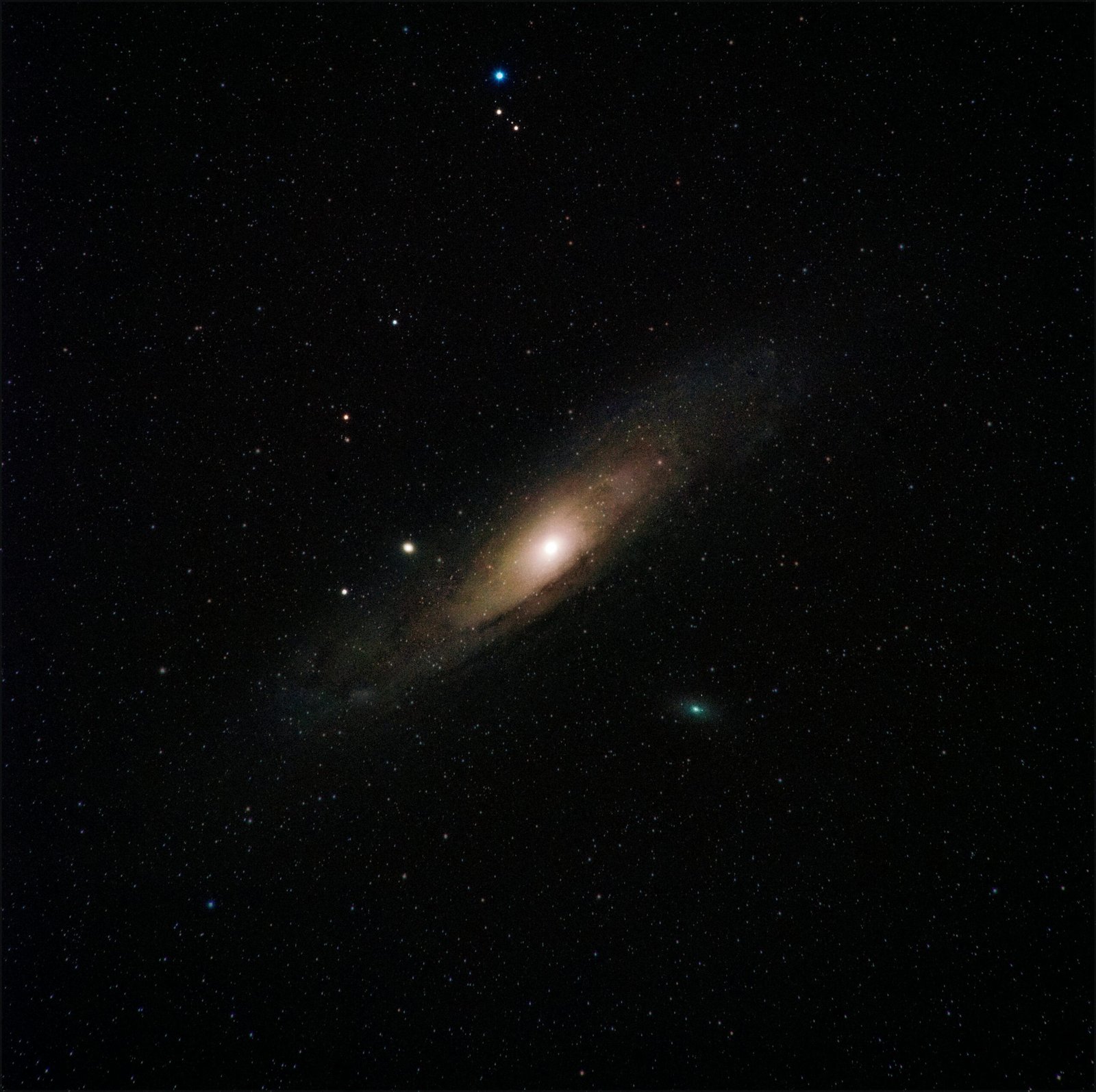
Perspective: Quasars represent a “brief” phase in a galaxy’s life—a violent adolescence. Even our Milky Way may have once been a quasar, and it may become one again when it eventually collides with the Andromeda galaxy billions of years from now.
- Summarize the latest J0529-4351 growth data
- Create a comparison table of AGN categories
- Explain the ‘Lyman-Alpha Forest’ mapping technique





Leave a Reply