

In the scientific landscape of March 2026, Dark Matter remains one of the most significant “known unknowns” in physics. We know it exists because we can see its gravitational effects on galaxies, yet it remains invisible to every telescope we have ever built.
To understand why, we have to look at the fundamental way matter interacts with the universe.
🔍 1. The “Invisible Scaffolding” of the Universe
Visible matter—stars, planets, and people—makes up only about 5% of the universe. Dark matter makes up roughly 27%. (The remaining 68% is Dark Energy).
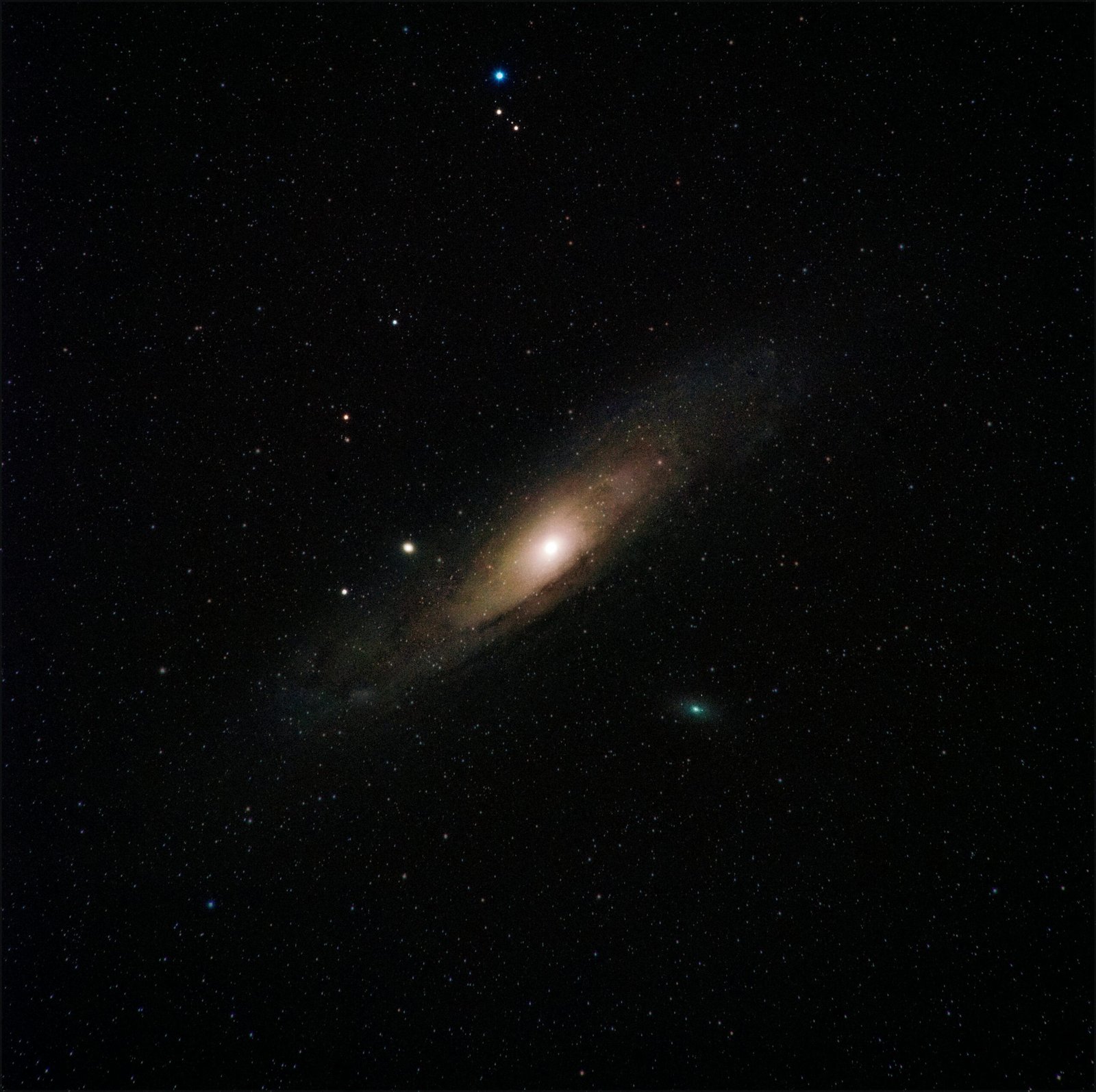
Think of a galaxy like a cosmic merry-go-round. Based on the amount of visible “stuff” (stars and gas) in a galaxy, the outer stars should be flying off into deep space because there isn’t enough gravity to hold them. Instead, they stay in orbit.
- The Conclusion: There must be a massive amount of “invisible” matter providing the extra gravitational “glue” to hold galaxies together.
🚫 2. Why Can’t We See It? (The Physics of Invisibility)
We “see” things when they interact with the Electromagnetic Force. Dark matter is “dark” because it is a non-electromagnetic form of matter.
- No Light Interaction: Dark matter does not emit, absorb, or reflect light (photons). It doesn’t glow like a star, reflect light like a planet, or block light like a cloud of dust.
- Ghost-Like Nature: Most matter interacts via the electromagnetic force, which is why you don’t fall through your chair (the electrons in your body repel the electrons in the chair). Dark matter lacks this interaction. It can pass straight through you, the Earth, and the Sun without ever “touching” an atom.
- The Only Link is Gravity: Dark matter’s only known “handshake” with the rest of the universe is through Gravity. It has mass, so it curves space-time, but it remains silent to every other sense.
🧪 3. What Could It Be? (The 2026 Leading Candidates)
As of March 2026, the search has narrowed down to a few primary theoretical particles:
- WIMPs (Weakly Interacting Massive Particles): Heavy particles that interact only through gravity and the “Weak” nuclear force. While popular for decades, recent 2025/2026 experiments at the LUX-ZEPLIN detector have failed to find them, leading some scientists to look elsewhere.
- Axions: Extremely light, ghost-like particles. In early 2026, many physicists have shifted their focus here. If axions exist, they could “convert” into photons in the presence of strong magnetic fields—a phenomenon researchers are currently trying to trigger in labs.
- Primordial Black Holes: Some theories suggest dark matter isn’t a new particle at all, but rather millions of tiny black holes created in the first second after the Big Bang.
🔭 4. How We Detect the “Undetectable”
Since we can’t see it directly, we use Gravitational Lensing.
Because dark matter has mass, it warps the fabric of space. When light from a distant galaxy passes through a cluster of dark matter, the light bends—much like light passing through a glass lens. By measuring how much the light is distorted, astronomers can map exactly where the dark matter is hiding.
💡 5. Why Does It Matter?
Without dark matter, the universe as we know it could not exist.
- Galactic Birth: In the early universe, dark matter acted as the “seeds.” Its gravity pulled in the first clouds of hydrogen gas, which then collapsed to form the first stars.
- Cosmic Web: Today, dark matter forms a giant “Cosmic Web”—a vast network of invisible filaments that connect galaxies across the void of space.
Perspective: We are currently living in the “Dark Matter Era” of discovery. Much like 19th-century scientists knew “Air” existed but couldn’t see its molecules, we are waiting for the 2026–2030 generation of sensors to catch a single dark matter particle in the act of interacting.
- Draft a summary of the 2026 LUX-ZEPLIN results
- Compare WIMPs vs Axions in a table
- Explain the difference between Dark Matter and Dark Energy







Leave a Reply